
Augmented reality is moving from novelty to necessity as companies look for faster, clearer, and more interactive ways to serve customers, train teams, manage assets, and visualize complex information. Augmented reality app development services help businesses turn physical environments into digital interfaces, allowing users to see useful content layered over real-world objects through smartphones, tablets, headsets, or smart glasses.
TLDR: Augmented reality app development services help businesses create practical tools for sales, training, operations, maintenance, and customer engagement. These apps can improve decision-making, reduce errors, and make complex products or processes easier to understand. A strong AR solution requires clear business goals, reliable 3D content, user-friendly design, and integration with existing systems.
What Augmented Reality App Development Means for Businesses
Augmented reality app development involves designing and building software that blends digital content with the physical world. In a business setting, this may include interactive product demonstrations, real-time repair instructions, warehouse navigation, virtual try-ons, or immersive employee training programs.
Unlike virtual reality, which places users inside a fully digital environment, AR enhances the existing environment. This makes it especially valuable for companies that need employees or customers to remain aware of their surroundings while receiving additional digital guidance.
Key Business Applications of AR Development
Modern AR apps are no longer limited to entertainment or marketing campaigns. They now support essential business functions across multiple industries. Development teams often build custom solutions for specific workflows, products, and operational challenges.
- Retail and ecommerce: Customers can preview furniture in a room, try on glasses, test cosmetics, or inspect products in 3D before purchasing.
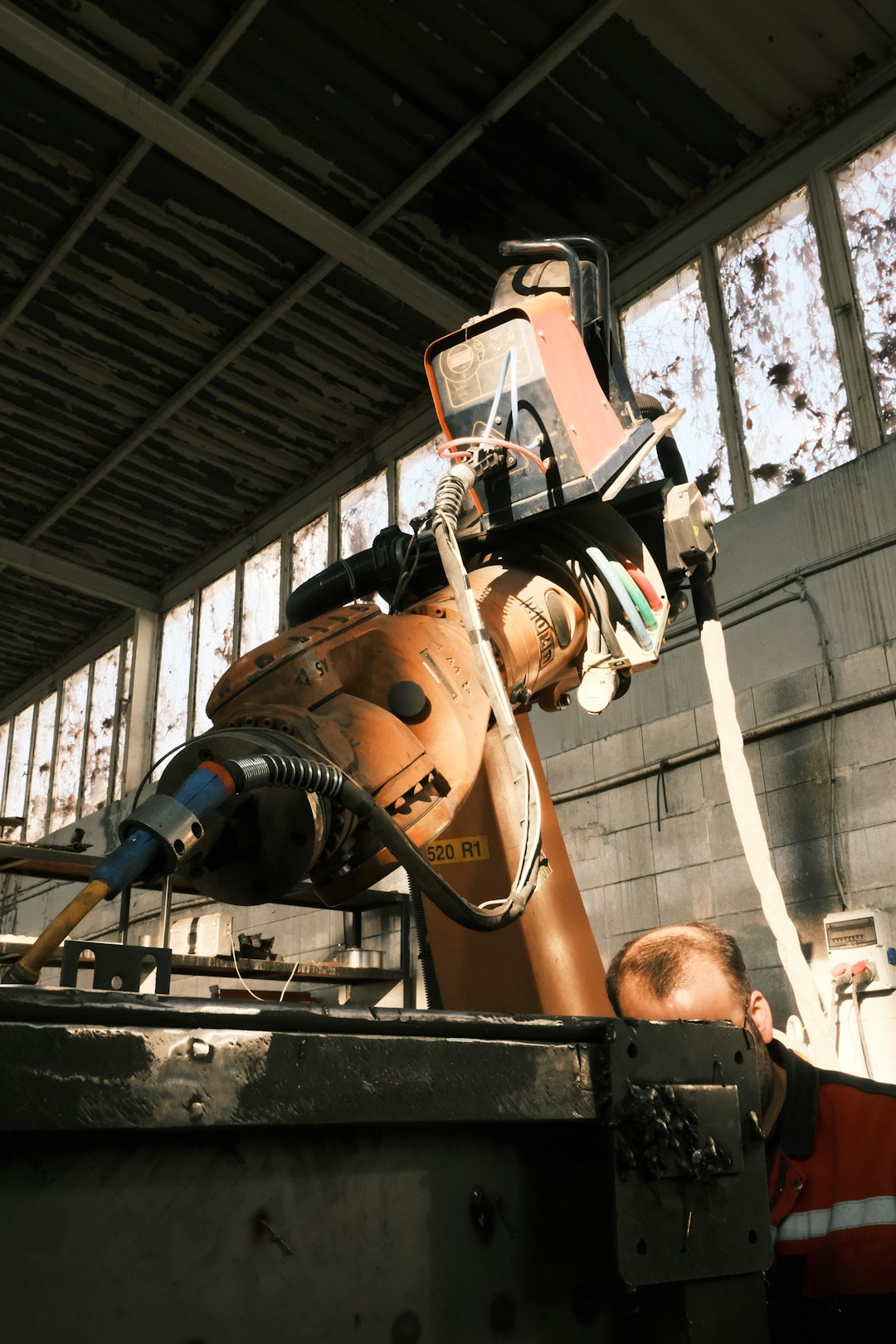
- Manufacturing: Technicians can view assembly instructions, machine data, and safety alerts directly on equipment.
- Healthcare: Medical teams can use AR for anatomy education, patient communication, surgical planning, and equipment training.
- Real estate and construction: Developers can present architectural models, interior layouts, and building systems on-site.
- Logistics and warehousing: Workers can receive visual picking routes, inventory data, and location-based instructions.
- Education and corporate training: Learners can interact with simulations, technical models, and step-by-step scenarios.
Core Features of Business AR Applications
Effective AR applications are built around usability and real business value. While features vary by industry, many enterprise-grade AR solutions include common capabilities that improve workflow and engagement.
- Object recognition: The app identifies products, machines, labels, or locations and displays relevant digital content.
- 3D visualization: Users can rotate, scale, and inspect digital models in real-world spaces.
- Interactive instructions: Employees receive visual guidance for repairs, assembly, installation, or training.
- Real-time data overlays: Business systems provide live information such as inventory levels, sensor readings, or performance metrics.
- Remote assistance: Experts can guide field workers by marking objects or sharing instructions through an AR interface.
- Analytics and reporting: Businesses can track usage, task completion, customer behavior, and training performance.
Benefits of AR App Development Services
Companies invest in AR app development because it can create measurable operational and commercial advantages. When implemented strategically, AR helps reduce knowledge gaps, improve accuracy, and shorten the time needed to complete important tasks.
Customer engagement is one of the most visible benefits. An interactive product experience can make a brand more memorable and help buyers feel more confident. A customer who sees how a sofa fits in a living room or how industrial equipment operates in a facility is more likely to understand the value of the product.
Employee productivity is another major advantage. Instead of switching between manuals, screens, and physical tools, workers can view instructions directly in context. This is especially useful in complex environments where mistakes are expensive or dangerous.
Training efficiency also improves. AR allows employees to practice realistic procedures without disrupting active operations. New staff can learn faster, while experienced workers can refresh skills through guided simulations.
The AR App Development Process
Professional augmented reality app development services usually follow a structured process. This ensures that the final application is not only impressive but also reliable, scalable, and aligned with business goals.
- Discovery and strategy: The development team studies the business problem, target users, technical environment, and expected outcomes.
- Concept design: Designers define the user journey, interface layout, AR interactions, and content requirements.
- 3D asset creation: Specialists create or optimize models, animations, textures, and visual elements for smooth performance.
- App development: Developers build the application using suitable AR frameworks, device capabilities, and backend systems.
- Integration: The AR solution connects with platforms such as CRM, ERP, inventory software, ecommerce systems, or IoT devices.
- Testing and optimization: The app is tested for accuracy, performance, usability, lighting conditions, device compatibility, and data security.
- Deployment and support: The solution is launched, monitored, updated, and improved based on feedback and analytics.
Choosing the Right AR Development Partner
A business should select an AR app development partner with both technical capability and industry understanding. AR projects often involve more than standard mobile app development because they require spatial design, camera-based interaction, 3D optimization, and sometimes hardware integration.
Important evaluation factors include portfolio quality, experience with enterprise apps, knowledge of ARKit, ARCore, WebAR, Unity, Unreal Engine, and cloud-based services. The partner should also understand user experience design, because an AR app that is difficult to use will not deliver strong adoption.
Security and scalability are equally important. Business AR apps may handle customer data, operational information, product designs, or maintenance records. A reliable provider should plan for secure authentication, encrypted communication, role-based access, and long-term maintenance.
Challenges Businesses Should Consider
Although AR offers major potential, businesses should approach implementation carefully. Poor planning can lead to apps that look impressive in demonstrations but fail in real operations.
- Device limitations: Not all users have the same smartphone, tablet, headset, or processing power.
- Environmental conditions: Lighting, reflective surfaces, and crowded spaces can affect AR tracking.
- Content quality: Low-quality 3D models or inaccurate overlays can damage trust and usability.
- User adoption: Employees may need training and a clear explanation of how the app improves their work.
- System integration: AR becomes more valuable when connected to accurate, real-time business data.

The Future of AR in Business
The future of AR business applications is likely to be shaped by lighter wearable devices, stronger mobile processors, artificial intelligence, spatial computing, and faster connectivity. As these technologies mature, AR apps will become more natural, responsive, and deeply connected to business systems.
Industries that rely on visualization, precision, guidance, or customer interaction will continue to benefit. The most successful companies will not treat AR as a gimmick. Instead, they will use it as a practical interface that connects people, products, and data in real time.
For many organizations, augmented reality app development services provide a path toward more interactive sales experiences, smarter operations, safer training, and better decision-making. When strategy, design, and technology work together, AR can become a powerful business tool rather than a temporary trend.
FAQ
What are augmented reality app development services?
They are professional services focused on designing, building, testing, and supporting apps that overlay digital content onto the real world for business or consumer use.
Which businesses can benefit from AR applications?
Retail, manufacturing, healthcare, construction, logistics, education, real estate, automotive, and many service-based industries can benefit from AR when it solves a clear business problem.
How long does it take to develop a business AR app?
Development time depends on complexity, features, 3D content, integrations, and supported devices. A simple prototype may take weeks, while a full enterprise solution may take several months.
Does an AR app require special hardware?
Not always. Many AR apps work on standard smartphones and tablets. More advanced use cases may rely on smart glasses or mixed reality headsets.
What makes an AR app successful?
A successful AR app has a clear purpose, accurate tracking, useful content, simple navigation, strong performance, and measurable value for customers or employees.