
Cartoons and mathematics may seem like an unlikely pair, yet together they can create a powerful learning experience. When educators combine visual storytelling with mathematical thinking, learners often find abstract ideas easier to understand, remember, and apply. This approach supports engagement, reduces anxiety, and helps students connect numbers, patterns, and problem-solving to familiar situations.
TLDR: Cartoons can make math more approachable by turning abstract concepts into visual stories. They help students understand relationships, patterns, and processes through characters, humor, and memorable scenes. When used thoughtfully, cartoons support deeper learning, stronger motivation, and better retention. The best results occur when cartoons are paired with clear mathematical goals and guided discussion.
Why Cartoons Support Learning
Cartoons are effective because they simplify complex information without removing meaning. A cartoon can show a character dividing pizza slices, measuring a bridge, or solving a mystery using patterns. These scenes give learners a concrete image to attach to an idea that might otherwise feel invisible or intimidating.
In many classrooms, students struggle with math not because they lack ability, but because the concepts feel disconnected from real life. Cartoons create a bridge between everyday experience and formal mathematical language. A student who watches a character compare distances, count objects, or organize information can begin to see math as a useful tool rather than a set of isolated rules.
Reducing Math Anxiety Through Humor
Math anxiety can interfere with learning outcomes. When students feel stressed, they may avoid participation, guess quickly, or give up before understanding the problem. Cartoons can lower this emotional barrier by adding humor, playfulness, and personality to the lesson.
A funny character making a mistake in a calculation can show students that errors are part of learning. Instead of seeing mistakes as failure, learners can view them as clues. This shift is important because strong math learning depends on persistence, revision, and reasoning.
For example, a cartoon character might try to share 12 cookies among 5 friends and discover that the division does not come out evenly. This situation naturally introduces remainders, fractions, or decimals. The humor keeps the mood light, while the math remains meaningful.
Making Abstract Concepts Visible
Some mathematical ideas are difficult because they cannot be easily seen. Fractions, negative numbers, variables, probability, and geometric transformations often require students to imagine relationships. Cartoons can make these relationships visible.
- Fractions: A cartoon cake, pizza, or treasure map can show parts of a whole.
- Geometry: Animated shapes can rotate, slide, flip, and change size.
- Algebra: Characters can represent unknown values in a story-based equation.
- Probability: Cartoon games, spinners, and mystery boxes can model chance outcomes.
- Measurement: Characters building, cooking, or traveling can demonstrate units and scale.
When students see math represented as movement, comparison, and action, they are more likely to understand what the symbols mean. The cartoon does not replace formal notation, but it prepares learners to interpret it.
Using Storytelling to Build Problem-Solving Skills
Mathematics is not only about answers; it is also about thinking. Cartoons naturally use stories, and stories provide context for problem-solving. A character with a goal, obstacle, and decision can turn a math exercise into a meaningful challenge.
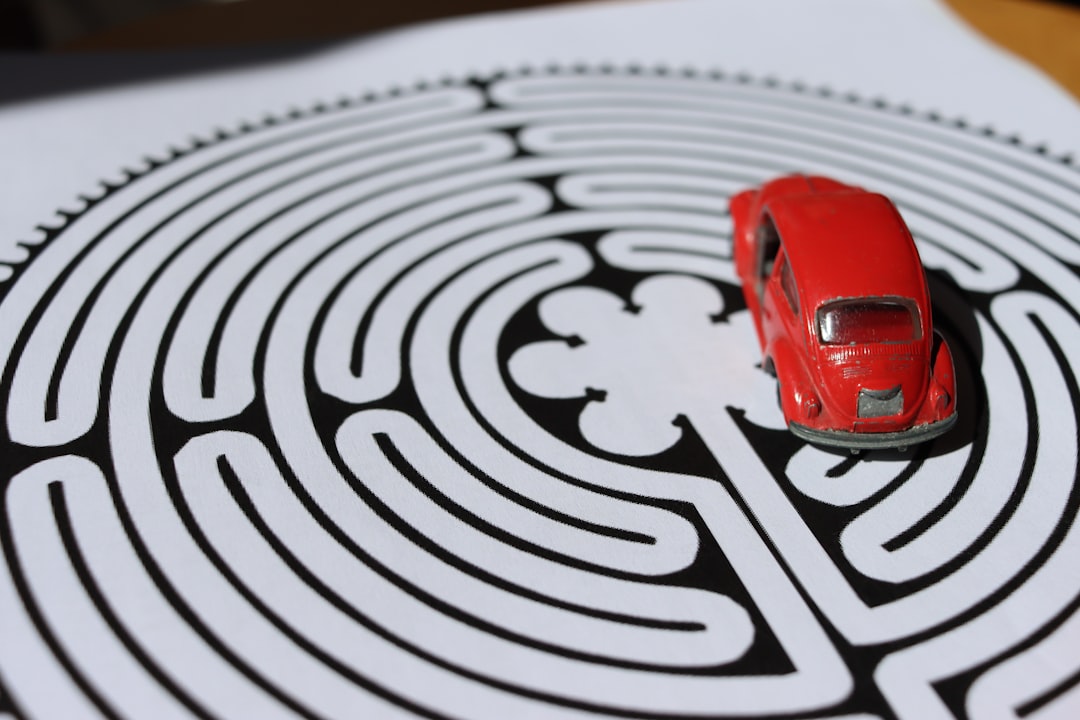
For instance, a cartoon explorer may need to calculate the shortest path through a maze, estimate supplies for a journey, or decode a number pattern to open a gate. These story elements encourage learners to ask important questions: What information is available? What operation is needed? Does the answer make sense?
This type of learning can be especially helpful for students who find traditional worksheets repetitive. A story-based math task gives purpose to the calculation. It also encourages discussion, as learners can explain the reasoning behind a character’s choices.
Improving Memory and Retention
Students often remember images and stories more easily than isolated facts. A memorable cartoon scene can act as a mental anchor. When a learner later encounters a similar problem, the image may help recall the method used.
For example, a cartoon elevator can help explain positive and negative numbers. Going up represents positive movement, while going down represents negative movement. The student may later remember the elevator image when solving integer problems. This visual memory supports long-term retention because it connects emotion, image, and concept.
Cartoons are also useful for reviewing previous lessons. A short comic strip can summarize a procedure, show common mistakes, or compare different solution strategies. This helps learners revisit content without feeling that review is dull or repetitive.
Encouraging Participation and Discussion
Cartoons can make classroom conversations more inclusive. Students who hesitate to speak about formulas may feel more comfortable discussing what a character did or why a scene is funny. This opens a path toward mathematical reasoning.
An educator might show a cartoon where a character solves a problem incorrectly and ask students to identify the error. This approach encourages analysis without putting any individual student on the spot. It also promotes a growth mindset because the class focuses on improving reasoning rather than judging performance.
Group activities can be built around cartoons as well. Learners may create comic panels explaining a math concept, write dialogue for characters solving a problem, or design an alternate ending that uses a different strategy. These tasks combine creativity with precision.
Best Practices for Educators
Cartoons are most effective when they are connected to clear learning goals. They should not be used only as decoration or entertainment. A strong cartoon-based math activity includes a concept, a visual model, and an opportunity for students to explain their thinking.
- Start with the objective: The educator should identify the exact skill or concept the cartoon will support.
- Keep the visual simple: Too many details can distract from the mathematical idea.
- Include guided questions: Students should be encouraged to interpret, calculate, compare, and justify.
- Connect to formal math: After the cartoon, learners should practice using equations, diagrams, or vocabulary.
- Invite student creation: Making cartoons can deepen understanding because students must explain the concept clearly.
Benefits Across Age Groups
Cartoons can support learners at many levels. Younger students may use cartoon animals, food, or toys to understand counting, addition, and shapes. Older students may benefit from comics that explain ratios, functions, statistics, or logical reasoning.
Even advanced learners can gain from visual storytelling. A cartoon can introduce a complicated topic before formal instruction begins. It can also show how math appears in science, sports, architecture, technology, and everyday decisions. This helps students see mathematics as a living subject rather than a collection of disconnected procedures.
Potential Challenges
Although cartoons can improve engagement, they must be used carefully. If the humor overwhelms the lesson, students may remember the joke but not the concept. If the cartoon is too childish for the age group, learners may feel that the material is not serious. If the math is oversimplified, students may not develop the depth needed for independent problem-solving.
To avoid these issues, educators should select or design cartoons that match the maturity, background knowledge, and learning needs of the class. The goal is not to make math easier in a shallow way, but to make it more accessible, meaningful, and memorable.
Conclusion
Using cartoons and math together can improve learning outcomes by combining imagination with reasoning. Cartoons reduce anxiety, clarify abstract concepts, support memory, and encourage active participation. When educators use them with purpose, they can help students move from passive calculation to genuine understanding. The result is a classroom where math feels less intimidating and more connected to curiosity, creativity, and real thinking.
FAQ
Can cartoons really improve math performance?
Yes. Cartoons can improve performance when they support clear instruction, guided practice, and mathematical reasoning. They help students understand and remember concepts more easily.
Are cartoons only useful for young children?
No. While cartoons are popular with younger learners, older students can also benefit from visual explanations, comic-style problem scenarios, and humorous examples of complex ideas.
How should educators use cartoons in math lessons?
Educators should use cartoons to introduce concepts, model problem-solving, identify mistakes, encourage discussion, or review key ideas. The cartoon should always connect to a specific learning goal.
Can students create their own math cartoons?
Yes. Student-created cartoons can be highly effective because they require learners to explain a concept clearly, organize information, and show mathematical reasoning in a visual form.
What is the biggest risk of using cartoons in math?
The biggest risk is distraction. If the cartoon is too entertaining without enough mathematical purpose, it may reduce focus. Effective cartoons balance humor, clarity, and meaningful content.