
Hiring can feel like a treasure hunt. The treasure is a great candidate. The map is a messy inbox. The dragon is your calendar. Good recruiting software helps you skip the chaos and get to the gold faster.
TLDR: The best recruiting software with built-in sourcing and automation helps you find candidates, contact them, track them, and hire them with less manual work. Tools like Greenhouse, Lever, Workable, Ashby, SmartRecruiters, and Gem are strong choices. Pick the one that fits your team size, hiring volume, budget, and workflow. The right tool should make hiring faster, cleaner, and much less painful.
Why Built-In Sourcing and Automation Matter
Recruiting is not just posting a job and waiting. That might work sometimes. But most great candidates are already busy. They are working. They are not checking job boards every morning with coffee and dreams.
That is where sourcing comes in. Sourcing means finding people before they apply. It means searching talent pools, profiles, databases, referrals, and past applicants.
Then comes automation. Automation handles the boring stuff. It sends emails. It schedules interviews. It moves candidates between stages. It reminds hiring managers to give feedback. It does not need snacks. It does not get tired.
Together, sourcing and automation are like peanut butter and jelly. Or coffee and Monday. They just work better as a pair.
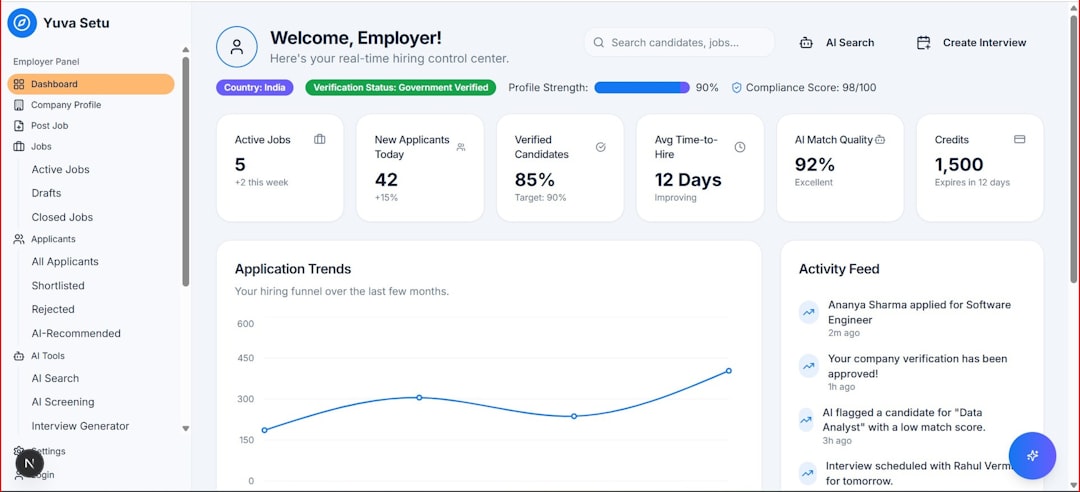
What to Look For in Recruiting Software
Before we name names, let us keep things simple. A good recruiting platform should help you do a few key things very well.
- Find candidates: Search databases, talent pools, social profiles, and past applicants.
- Reach candidates: Send personalized email campaigns without copying and pasting all day.
- Track progress: See where every candidate is in the hiring process.
- Automate tasks: Reduce manual work with triggers, reminders, and templates.
- Collaborate: Let recruiters, managers, and interviewers work in one place.
- Measure results: Show reports on source quality, time to hire, and funnel health.
Now let us meet the tools that can help your hiring team move like a tiny, organized rocket ship.
1. Greenhouse
Greenhouse is one of the most popular recruiting platforms for structured hiring. It is great for teams that want a clear process. It helps companies build consistent interview plans. It also makes collaboration easier.
Greenhouse has strong automation features. You can automate interview reminders, candidate updates, scorecards, and stage changes. It also works well with sourcing tools and integrations. Many teams use Greenhouse with platforms like LinkedIn, Gem, SeekOut, and job boards.
Best for: Growing teams that care about process, fairness, and reporting.
Fun note: Greenhouse is like the neat friend who labels every drawer. At first, you laugh. Then you can actually find the scissors.
2. Lever
Lever combines applicant tracking and candidate relationship management. That means it helps with both active applicants and passive candidates. This is useful because not everyone is ready to apply today.
Lever lets recruiters build talent pipelines. You can nurture candidates over time. You can send email sequences, track conversations, and view candidate history. The automation tools help keep things moving without constant babysitting.
Best for: Companies that want recruiting and candidate nurturing in one system.
Lever is especially helpful when your hiring team wants to build relationships. Not every candidate says yes right away. Some need time. Some need more information. Some need three emails and a friendly nudge.
3. Workable
Workable is a friendly choice for small and mid-sized teams. It is easy to use. It also packs in a lot of helpful sourcing features.
Workable has built-in candidate sourcing from a large database. It can suggest candidates for open roles. It also supports automated emails, interview scheduling, job posting, assessments, and pipeline management.
Best for: Teams that want an all-in-one recruiting tool without a long learning curve.
Workable is like a Swiss Army knife. It does many things. It does not make your lunch. But give it time.

4. Ashby
Ashby is loved by many modern recruiting teams. It combines ATS features, scheduling, analytics, and automation. It is often used by startups and scaling companies that want deep reporting.
Ashby helps teams understand what is working. Which source brings the best candidates? Where do candidates drop off? Which hiring manager is taking too long to review feedback? Ashby can help answer these questions.
It also includes automation for workflows, approvals, reminders, and scheduling. This makes it easier to run a clean hiring process at speed.
Best for: Data-driven teams that want strong reporting and flexible workflows.
If your recruiting team loves charts, Ashby may cause happy little squeaks.
5. SmartRecruiters
SmartRecruiters is built for larger hiring teams and enterprise recruiting. It offers applicant tracking, job advertising, candidate management, and automation.
One big strength is its marketplace and integrations. Teams can connect sourcing tools, assessments, background checks, and onboarding systems. It also supports automated job distribution and candidate communication.
Best for: Larger companies that need a flexible hiring platform across many teams or locations.
SmartRecruiters is not tiny. It is more like a command center. If your company hires in many places, this can be very useful.
6. Gem
Gem is a powerful sourcing and recruiting CRM platform. It is especially strong for outbound recruiting. If your team spends lots of time finding candidates and sending outreach, Gem is worth a look.
Gem helps recruiters find, organize, and contact passive candidates. You can build email sequences. You can personalize messages. You can track replies. You can see which outreach works best.
Gem also connects with many ATS platforms. So it can work alongside tools like Greenhouse, Lever, and Workday.
Best for: Sourcing-heavy teams that need better outbound campaigns and candidate nurturing.
Think of Gem as your recruiting megaphone. But polite. And with analytics.
7. SeekOut
SeekOut is known for talent search. It helps recruiters find candidates across many sources. It is popular for technical hiring, diversity sourcing, and hard-to-fill roles.
SeekOut offers advanced search filters. Recruiters can build lists of candidates and run outreach. It also provides insights into talent pools. This can help teams understand where candidates are and how to reach them.
Best for: Teams hiring specialized talent, especially in tech, engineering, healthcare, and leadership roles.
SeekOut is like a metal detector for talent. Beep. There is a senior engineer. Beep. There is a product leader. Beep. Someone who actually knows Kubernetes.
8. Manatal
Manatal is a budget-friendly recruiting platform with many useful features. It includes applicant tracking, candidate enrichment, job posting, and automation.
Manatal can pull candidate information from online sources. It also includes AI-powered recommendations. This can help recruiters match candidates to jobs faster.
The platform is simple compared with enterprise tools. That is not a bad thing. Sometimes simple is exactly what a team needs.
Best for: Small businesses, agencies, and teams that want strong features at a lower price.
9. Breezy HR
Breezy HR is a simple and visual recruiting tool. It uses drag-and-drop pipelines. This makes candidate tracking easy to understand.
Breezy includes job posting, candidate messaging, interview scheduling, assessments, and automation. You can create automated actions when candidates move between stages. For example, you can send an email when someone reaches the interview stage.
Best for: Small teams that want a clean, visual hiring pipeline.
Breezy HR feels light and friendly. The name fits. It is not trying to be a spaceship. It is trying to help you hire without pulling your hair out.

10. Recruit CRM
Recruit CRM is popular with recruitment agencies and staffing firms. It combines ATS and CRM tools. This matters because agencies manage both candidates and clients.
Recruit CRM includes sourcing support, email automation, candidate tracking, job management, and reports. It also helps recruiters manage business development workflows.
Best for: Staffing agencies and search firms that need candidate and client management together.
If you recruit for many clients, spreadsheets can become a swamp. Recruit CRM can help you put on boots and build a bridge.
How to Choose the Right Tool
Do not pick software just because it has a shiny website. Shiny is nice. Useful is better.
Start with your hiring problem. Are you losing candidates because follow-up is slow? You need automation. Are you not finding enough qualified people? You need sourcing. Are managers forgetting feedback? You need collaboration tools and reminders.
Here is a simple way to decide:
- Small business: Try Workable, Breezy HR, or Manatal.
- Fast-growing startup: Try Lever, Ashby, or Greenhouse.
- Large company: Try SmartRecruiters, Greenhouse, or iCIMS.
- Sourcing team: Try Gem or SeekOut.
- Recruiting agency: Try Recruit CRM or Manatal.
Also think about integrations. Your recruiting software should work with your calendar, email, HR system, job boards, background check tools, and assessment tools. If it does not connect well, your team may end up doing extra work. That defeats the whole point.
Features That Save the Most Time
Some features look fancy but do little. Others save hours every week. Look closely at these time-savers.
- Email sequences: Send follow-ups automatically while keeping messages personal.
- Interview scheduling: Let candidates pick times without endless email ping-pong.
- Candidate matching: Suggest people who fit open roles.
- Auto reminders: Nudge managers to review resumes and submit feedback.
- Pipeline rules: Trigger actions when candidates move stages.
- Reusable templates: Save job descriptions, emails, and scorecards.
- Reporting dashboards: Show what is working and what is not.
These features are not just “nice to have.” They are sanity savers. They help recruiters spend more time with people and less time clicking buttons.
Common Mistakes to Avoid
Buying recruiting software is exciting. It can also go sideways. Avoid these common mistakes.
- Choosing too much software: A giant system can slow down a small team.
- Ignoring the candidate experience: Automation should feel helpful, not robotic.
- Skipping training: Even simple tools need a clear rollout.
- Not cleaning old data: Messy data makes every tool less useful.
- Forgetting hiring managers: They must actually use the tool too.
The best platform is not always the biggest. It is the one your team will use every day.
Final Thoughts
Recruiting software with built-in sourcing and automation can change how your team hires. It can help you find better candidates. It can speed up follow-up. It can keep everyone aligned. It can also reduce the “Wait, who emailed this person?” moments.
Greenhouse and Lever are great for structured, growing teams. Workable and Breezy HR are friendly for smaller teams. Ashby is strong for analytics. SmartRecruiters fits larger organizations. Gem and SeekOut shine for sourcing. Manatal and Recruit CRM offer practical value for smaller teams and agencies.
The real goal is simple. Find good people. Treat them well. Move fast. Stay organized. And maybe, just maybe, stop living inside your inbox.