
In today’s API-driven ecosystem, search is no longer a background feature—it is often the product itself. Companies that provide API search solutions sit at the core of digital transformation, powering e-commerce discovery, documentation lookup, SaaS dashboards, and AI-enhanced knowledge bases. A close examination of leading API search company homepages reveals valuable insights into how they communicate reliability, performance, and developer adoption—three pillars that determine success in a competitive, infrastructure-heavy market.
TLDR: The best API search company homepages emphasize infrastructure reliability, measurable performance benchmarks, and developer-first adoption models. They use transparent metrics, architecture diagrams, integration examples, and social proof to build instant trust. High-performing websites balance technical depth with clarity while showcasing ecosystem compatibility and real-world results. Together, these elements create a narrative of stability, speed, and scalability.
The First Impression: Reliability as a Trust Signal
Reliability is the foundation upon which API search companies build credibility. Visitors—often developers, CTOs, or product managers—arrive with one question in mind: Can this system handle my production workloads? The homepage must answer that instantly.
The most effective API search homepages communicate reliability through:
- Uptime statistics (e.g., 99.99% SLA badges prominently displayed)
- Infrastructure transparency such as multi-region hosting or edge deployment
- Compliance certifications including SOC 2, ISO, or GDPR indicators
- Security-first messaging with encryption and access control details
Rather than burying these elements deep in documentation, top providers surface them immediately. A small badge near the hero section displaying “99.99% uptime” or “Global Edge Network” subtly reinforces operational maturity.
Additionally, visual trust signals often appear early in the scroll experience:

These images reinforce backend strength without overwhelming the visitor. The psychology is simple: if the infrastructure looks robust, the product must be as well.
Enterprise-focused search providers go further by discussing redundancy strategies, failover architecture, and distributed indexing. Even when simplified, mentioning replication policies or zero-downtime reindexing builds confidence among technically savvy audiences.
Performance Messaging: Speed as a Competitive Differentiator
Search performance is measurable, and leading companies lean heavily into quantifiable claims. Instead of generic statements like “blazing fast,” strong homepages cite:
- Query latency benchmarks (e.g., sub-50ms response times)
- Index scalability metrics (billions of records indexed)
- Throughput capacity per second across clusters
- Real-world load examples during traffic peaks
Numbers matter. Developers trust metrics. The difference between “fast” and “average 42ms globally” is credibility.
Another trend among top-performing API search homepages is interactive proof. Live demos allow users to type test queries and witness immediate results. This achieves two goals:
- Demonstrates performance in real time.
- Creates experiential validation instead of passive marketing claims.
Performance sections often blend quantitative data with architectural explanations. Diagrams illustrating request routing, distributed indexing, or caching layers bring clarity to otherwise abstract claims.
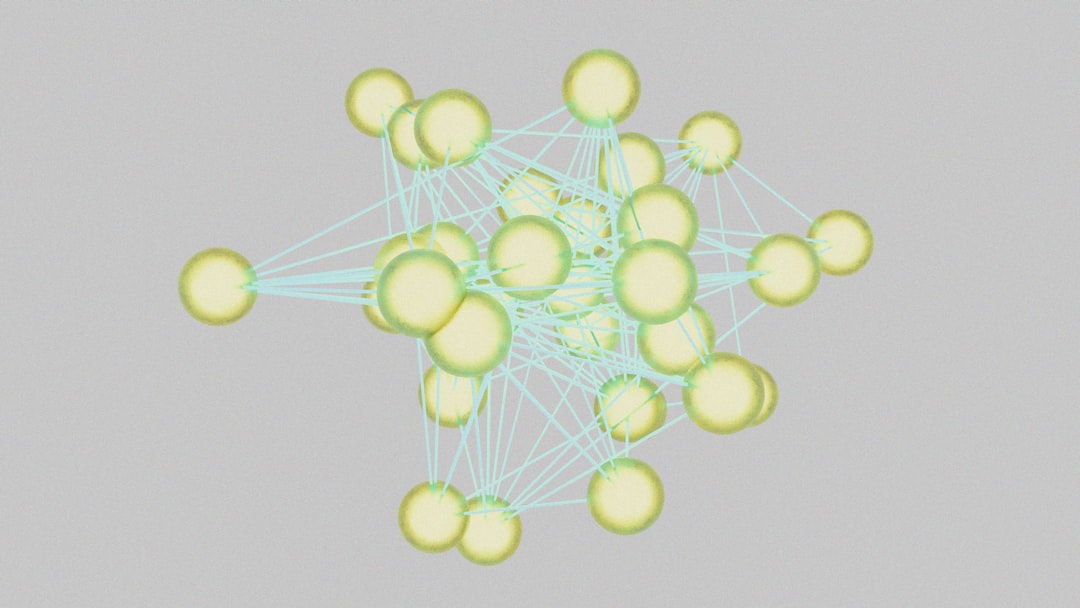
Importantly, top companies avoid overwhelming visitors with jargon. While they provide depth for experts, the homepage presents key metrics up front and links to whitepapers for deeper exploration. This structured layering of information aligns with both executive and engineer expectations.
Developer Adoption: Removing Friction at First Contact
Adoption begins the moment a developer encounters an API. The best API search homepages treat this as a product onboarding moment—even before signup.
Clear code snippets are not optional; they are central. The most effective pages include:
- Copy-paste API examples in multiple languages
- SDK availability badges (JavaScript, Python, Ruby, Go, etc.)
- Direct links to documentation above the fold
- One-click trial access or instant API keys
A homepage that forces a visitor to hunt for documentation risks losing momentum. In contrast, leading platforms often integrate code directly in the hero section, reinforcing the message: “You can implement this today.”
For example:
curl -X GET "https://api.searchprovider.com/v1/query?q=example"
This simplicity demonstrates usability better than paragraphs of product copy ever could.
Another notable adoption trend is the growing presence of community proof:
- GitHub stars displayed prominently
- Open-source contributions highlighted
- Developer testimonials instead of purely executive endorsements
These elements reflect a subtle shift: developer trust now outweighs traditional enterprise branding. When engineers advocate for a tool internally, decision-makers follow.
Social Proof and Ecosystem Integration
API search companies increasingly present themselves not as standalone tools, but as ecosystem enablers. Their homepages frequently highlight integrations with:
- Cloud platforms
- CI/CD pipelines
- Analytics suites
- Major CMS and e-commerce frameworks
Logo grids remain common, but there is growing sophistication in how they are used. Instead of simply listing famous customer names, high-quality homepages pair logos with mini case studies that show:
- Traffic volume handled
- Search accuracy improvement percentages
- Conversion uplift statistics
By combining credibility with measurable impact, these case studies transform logos into compelling evidence.

Ecosystem integration messaging also extends to compatibility assurances. Many leading providers emphasize modular deployment, container support, or serverless compatibility. The message is clear: “You do not need to change your architecture to adopt us.”
Clarity in Pricing and Scalability Messaging
Pricing transparency plays a vital role in adoption. The best API search homepages address pricing early—often with tier previews visible without scrolling extensively.
Common best practices include:
- Usage-based scaling visuals that illustrate predictable cost growth
- Free developer tiers to encourage experimentation
- Enterprise customization notes for large-volume users
Opaque pricing erodes trust, particularly in technical markets. Clear cost calculators and predictable request-based billing models reassure prospects evaluating long-term scalability.
Visual Hierarchy and Technical Communication Balance
Design sophistication matters. However, the strongest API search homepages avoid style overpowering substance. Instead, they strike a balance:
- Minimalistic layout with focused messaging
- Strategic use of whitespace
- Technical diagrams placed thoughtfully
- Concise feature blocks instead of dense paragraphs
This layout strategy respects the visitor’s time. Developers often scan rather than read line by line. Structured headings—Performance, Scalability, Security, Integrations—allow quick validation of requirements.
Moreover, homepages that include layered navigation (overview first, deep dive second) demonstrate maturity in communication. They appeal simultaneously to executives seeking reassurance and developers seeking implementation details.
Emerging Trends: AI Augmentation and Semantic Search
In recent years, AI messaging has become nearly universal. However, the strongest API search companies distinguish fluff from function by:
- Explaining vector search capabilities clearly
- Providing benchmarks for semantic relevance improvements
- Offering hybrid search models combining keyword and vector approaches
Rather than vague “AI-powered” claims, these companies describe tangible implementation benefits, such as improved document retrieval accuracy or multilingual expansion without manual optimization.
Homepages that support these claims with diagrams or workflow visuals demonstrate technological transparency—an increasingly valued trait among technical buyers.
Conversion Paths: From Curiosity to Commitment
Finally, the conversion strategy embedded within the homepage reveals much about adoption trends. Leading API search companies minimize friction by offering:
- Instant sandbox environments
- OAuth-based quick authentication
- Interactive playgrounds
- Email-free exploration options
The shift toward self-serve onboarding reflects developer purchasing behavior. Increasingly, developers prototype first and discuss procurement later. Homepages are therefore designed less as brochures and more as interactive gateways.
Key Patterns Across the Best Performers
Analyzing the homepages of top API search companies reveals consistent patterns:
- Reliability is communicated via metrics, security badges, and infrastructure clarity.
- Performance is proven through benchmarks, live demos, and architectural transparency.
- Developer adoption is accelerated by visible code examples and low-friction onboarding.
- Ecosystem readiness is expressed through integrations and compatibility messaging.
These components collectively shape perception. A homepage is not merely marketing—it is the first technical validation checkpoint.
Conclusion: The Homepage as Infrastructure Narrative
The best API search company homepages read like condensed technical roadmaps. They blend design sophistication with engineering substance. Reliability is proven, not promised. Performance is measured, not hinted at. Adoption is enabled, not deferred.
As competition intensifies and infrastructure budgets tighten, clarity will continue to surpass hype. Companies that prioritize transparent metrics, developer-first experiences, and ecosystem compatibility are setting the standard for the next generation of API search platforms.
Ultimately, the most successful homepages communicate a single, powerful message: “You can trust this system at scale.” And in the API economy, trust is everything.