
Few mobile games have sparked as much debate about monetization as Clash Royale. Since its global launch in 2016, millions of players have battled across arenas, collecting cards, upgrading decks, and climbing the competitive ladder. But one question refuses to go away: Is Clash Royale pay to win? To answer it properly, we need more than opinions—we need data. This article explores progression speed, spending patterns, and win rate statistics to determine whether money truly buys victory.
TL;DR: Clash Royale is not strictly pay to win, but it strongly rewards spending in terms of progression speed and early competitiveness. Data shows that paying players level up cards and towers significantly faster, increasing their win rates in mid-ladder environments. However, at top competitive levels, skill, strategy, and meta knowledge outweigh raw spending advantages. In short, money accelerates progress—but it does not guarantee dominance.
Understanding “Pay to Win” in Context
Before diving into statistics, it’s important to define what pay to win actually means. In gaming, the term usually implies that:
- Spending money gives players a direct gameplay advantage.
- Free players cannot reasonably compete at high levels.
- Victory is more dependent on money than skill.
Clash Royale monetizes through:
- Gems (premium currency)
- Pass Royale subscription
- Special offers and shop bundles
- Chest unlock acceleration
None of these purchases directly increase in-battle stats beyond card levels. However, since higher-level cards deal more damage and have more health, progression speed directly affects competitive power.
Progression Speed: Free vs Paying Players
The progression system in Clash Royale revolves around upgrading cards using:
- Gold
- Duplicate cards
- Wild cards and books
Data gathered from community tracking and progression simulations suggests that:
- A completely free-to-play (F2P) player takes approximately 12–18 months of consistent play to max a single competitive deck.
- A Pass Royale subscriber can reduce this timeline by 30–50%.
- Players purchasing shop bundles during events can max a deck in as little as 3–6 months.
The biggest bottlenecks are gold scarcity and high-rarity cards such as Champions. Pass Royale significantly increases resource flow through:
- Bonus rewards
- Improved chest queue management
- Magic items (Books, Wild Cards)
From a purely economic standpoint, spending clearly accelerates competitive readiness. The question then becomes: does faster progression equal more wins?
Card Levels and Win Rates: What the Data Shows
Clash Royale matches are determined by two major factors:
- Card level interactions
- Player skill and decision-making
Level differences matter significantly in early and mid ladder (Trophy Road). Consider these common examples:
- A Fireball one level higher can eliminate troops it otherwise would not.
- A higher-level Knight survives key counter-push interactions.
- Overleveled towers can negate chip strategies.
Community analyses suggest that even a 1-level card difference increases win probability by roughly 5–12% in otherwise evenly matched skill scenarios. A 2–3 level gap can make certain matchups nearly unwinnable.
This effect is most visible between:
- 5000–7500 trophies (mid-ladder)
- Returning players with underleveled decks
- New accounts progressing quickly through early arenas
However, at top ladder (top 10,000 ranked), nearly all players use max or tournament-standard cards. Here, spending offers little to no gameplay benefit because:
- Everyone’s cards are equalized at the cap.
- Micro-decisions and cycle management dominate outcomes.
- Meta adaptation becomes critical.
Conclusion: Spending strongly boosts win rates during progression phases, but its impact declines at the competitive ceiling.
The Pass Royale Effect
Pass Royale remains the most common form of spending. It costs relatively little compared to heavy shop bundles but delivers consistent value.
Key measurable benefits include:
- Increased gold per season
- More wild cards
- Extra crowns and seasonal progression rewards
- Guaranteed champion unlock opportunities
Based on seasonal reward calculations, Pass Royale increases monthly progression by approximately 40–60% compared to strictly free play.
This creates a noticeable divide:
- F2P players often struggle with one or two underleveled cards.
- Pass holders generally maintain evenly upgraded decks.
While not an automatic win button, Pass Royale dramatically reduces “level disadvantage frustration,” which indirectly improves ladder consistency.
Whales vs Moderate Spenders
The real pay-to-win concern often targets “whales”—players who spend hundreds or thousands of dollars.
What advantage do they gain?
- Immediate maxed decks
- Flexibility to switch to any meta deck instantly
- Early adoption of newly released cards

However, win rate data from global leaderboards indicates something surprising:
- Top 100 players are not necessarily the highest spenders.
- Many professional players practice on secondary accounts without heavy spending.
- Skill-based tournaments use level caps, nullifying spending advantages.
This suggests that while whales skip progression barriers, they cannot buy mechanical skill or game sense.
Matchmaking and Perceived Fairness
Another aspect of the pay-to-win debate concerns matchmaking.
Critics argue that:
- The system matches underleveled players against stronger decks.
- The algorithm incentivizes spending after loss streaks.
However, available evidence suggests matchmaking is primarily trophy-based. This creates “level walls” where:
- Low-skill but high-level players stagnate.
- High-skill but low-level players hit progression ceilings.
This compression effect leads to frequent mismatched interactions. Players encountering repeated level disadvantages may interpret the system as pay to win, even though the core issue is level distribution rather than algorithm manipulation.
Competitive Scene vs Ladder Reality
Clash Royale has two very different environments:
- Ladder (progression based)
- Competitive tournaments (level capped)
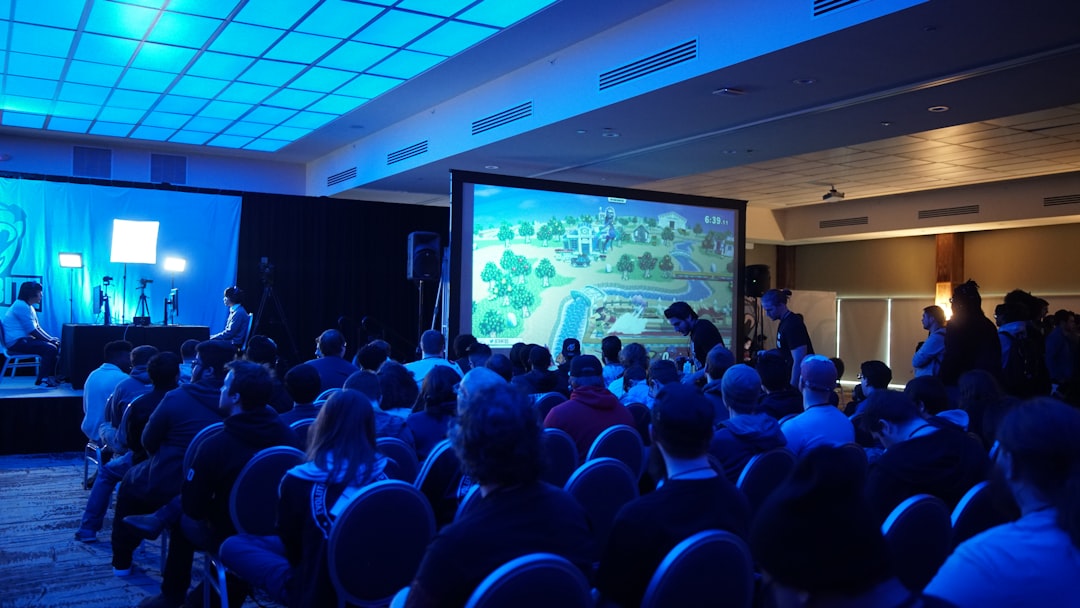
In competitive play:
- All cards are standardized.
- Friends and practice channels are free.
- Deck mastery determines performance.
Professional success is not gated by spending. Many notable top players began as free-to-play users before transitioning to sponsored competition.
This is a key distinction. A truly pay-to-win game would block elite performance without financial investment. Clash Royale does not do this at the esports level.
Psychology of Spending and Advantage
Monetization in Clash Royale leverages psychological principles:
- Loss aversion (frustration from underleveled losses)
- Scarcity (limited-time offers)
- Progress acceleration desire
Spending often feels like buying relief from friction rather than buying domination.
Players tend to spend when:
- Stuck at a trophy gate
- One card upgrade away from synergy completion
- A new card disrupts the meta
This reinforces the idea that Clash Royale monetizes impatience and frustration more than raw competitive superiority.
So… Is Clash Royale Pay to Win?
The answer depends on how we define winning.
Yes, in terms of:
- Progression speed
- Mid-ladder advantage
- Reducing level-based losses
No, in terms of:
- Top-tier competitive dominance
- Skill expression
- Esports viability
Money in Clash Royale primarily buys:
- Time
- Flexibility
- Comfort
It does not buy:
- Perfect elixir management
- Advanced matchup knowledge
- Micro-interaction mastery
Final Verdict
Clash Royale sits in a gray area between pay to progress and pay to win. Data clearly shows that spending accelerates upgrades and increases win probability in uneven ladder environments. However, the advantage diminishes as card levels equalize.
For casual players seeking faster improvement, modest spending—especially Pass Royale—can meaningfully smooth progression. For competitive purists, skill ultimately outweighs financial investment. The ceiling of success remains accessible without paying.
In practical terms, Clash Royale is pay to progress quickly, not pay to automatically win. Whether that crosses your personal definition of fairness depends on what you value more: time or money.
And in a game built around three-minute battles, the real currency might not be gems or gold—but patience.