
Best quick pick: If Airalo is too pricey, too slow to set up, or missing the exact country bundle you need, start by comparing Nomad, Holafly, Ubigi, GigSky, and aloSIM. Before buying any travel eSIM, check that your phone supports eSIM; Apple lists eSIM support on iPhone XS, iPhone XR, and newer models [source: Apple].
TLDR: Nomad is a strong all-round Airalo alternative for clear regional plans, while Holafly is best if you want lots of data and hate counting gigabytes. For example, a couple spending 10 days in Spain could buy two 5GB eSIMs instead of paying roaming fees that may run $10 per day per phone. If you mostly use maps, messaging, email, and restaurant searches, 3GB to 5GB per week is often enough. Heavy video users should look at larger or unlimited plans.
What makes a good Airalo alternative?
A good travel eSIM should be easy to buy, simple to install, and clear about what you get. That sounds basic. Still, some apps hide the useful details until checkout, which is annoyingly common.
Look at these points before paying:
- Coverage: Check the exact countries included, not just the region name.
- Data size: Light users may need 1GB to 3GB. Remote workers may need 10GB or more.
- Validity: A cheap 30-day plan may beat a smaller 7-day plan.
- Hotspot rules: Some “unlimited” plans limit tethering.
- Network partner: 5G access is nice, but solid 4G is usually fine.
- Top-ups: You do not want to reinstall a new eSIM at midnight in a hotel lobby.
1. Nomad
Best for: simple regional plans and fair pricing.
Nomad is one of the cleanest Airalo alternatives. The app is easy to understand, and plans are usually grouped by country, region, or global use. It works well for people moving between nearby countries, such as France, Italy, and Switzerland.
The catch is… plan quality can vary by destination. One country may have a great deal, while the next one feels average. Always compare before buying. Still, Nomad is a safe first stop for most travelers who want a normal amount of data at a fair price.
2. Holafly
Best for: data-heavy travelers who want fewer limits.
Holafly is popular because many of its plans focus on unlimited data. That makes it a strong choice for people who use Instagram, Google Maps, WhatsApp calls, and translation apps all day. It is also handy for first-time eSIM users who do not want to keep checking a data meter.
Check hotspot terms before you buy. Some destinations allow limited sharing, while others are stricter. If you need to work from a laptop, this matters. Honestly, few things are more irritating than buying “unlimited” data and then finding out your laptop cannot use it the way you expected.
3. Ubigi
Best for: frequent travelers, tablets, laptops, and connected devices.
Ubigi feels a bit more technical than some rivals, but it is useful. It has plans for phones, tablets, Windows laptops, and some connected cars. That makes it a good pick if you carry more than one device or travel often for work.
Ubigi is especially worth checking for trips to Europe, Japan, and North America. The app is not always the prettiest, but it gets the job done. Prices can be very good on select routes, so it deserves a spot on your comparison list.
4. GigSky
Best for: unusual trips, cruises, and premium coverage choices.
GigSky has been around for years and works in many destinations. It also offers options that some budget-first eSIM apps skip, including plans for cruise travelers and certain in-flight use cases.
This does not mean GigSky is always the cheapest. It often feels more like a flexible travel data service than a bargain bin. Use it when your trip is odd, your route crosses several countries, or you want a provider with broader plan types.
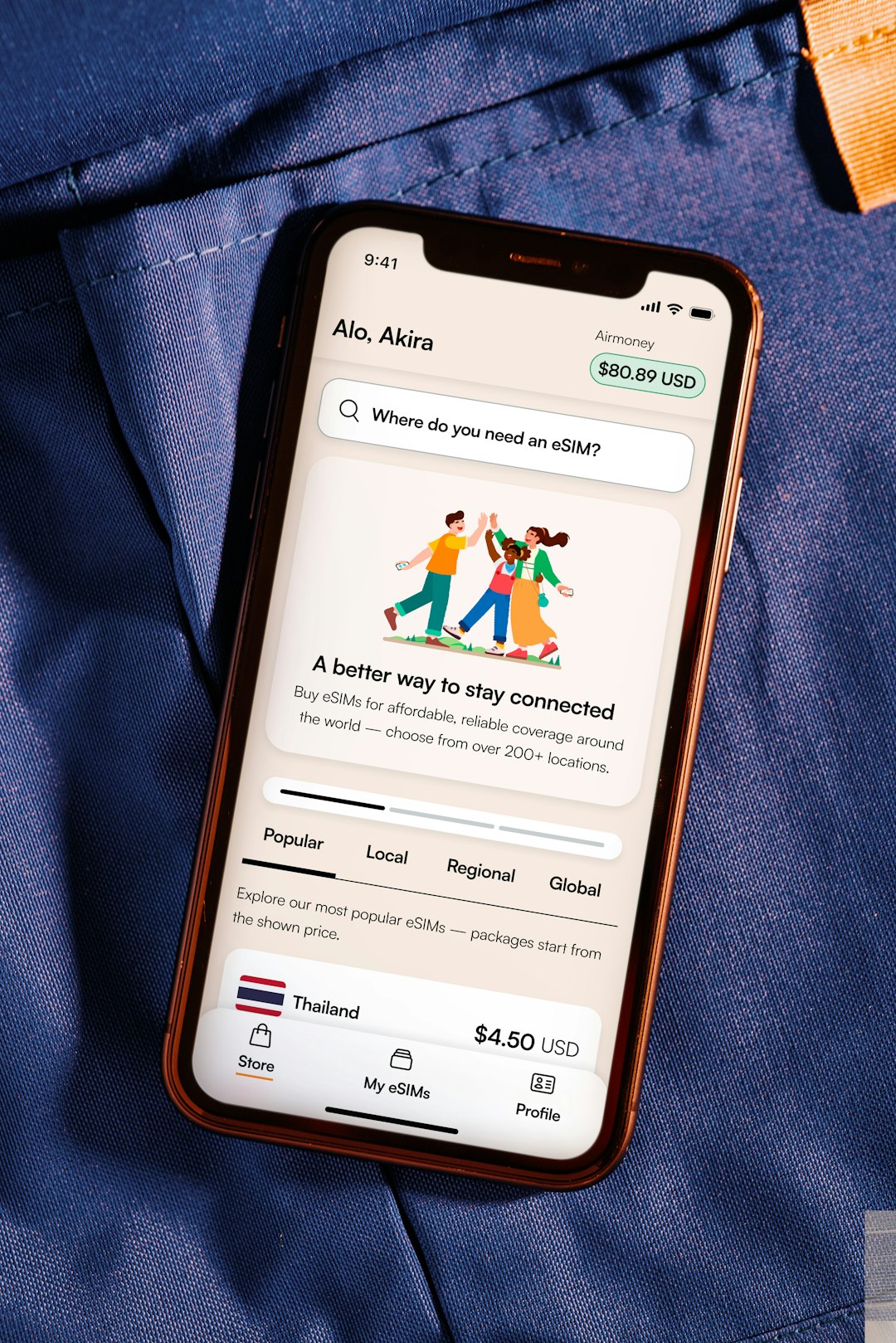
5. aloSIM
Best for: casual travelers who want a friendly app.
aloSIM is easy to use and good for short trips. The app does not bury you in tech terms, which is a relief when you are standing at arrivals with 8% battery. It offers local and regional plans, plus top-ups in many places.
It is a strong pick for people who need data for maps, rideshare apps, messaging, and quick browsing. If you need lots of streaming or daily hotspot use, compare its bigger plans against Nomad and Holafly first.
How to keep international data costs low
- Buy before you fly: Install the eSIM at home on Wi-Fi.
- Do not activate too early: Some plans start when installed. Others start when they connect abroad.
- Use offline maps: Download city maps before leaving the hotel.
- Turn off cloud backups: Photos and app updates can burn through data fast.
- Label your SIMs: Name one “Home” and one “Travel” so you do not mix them up.
- Use Wi-Fi for video: Short clips add up faster than people expect.

Best choice by traveler type
- Weekend city break: aloSIM or Nomad.
- Two-week Europe trip: Nomad or Ubigi regional plan.
- Heavy social media use: Holafly.
- Business travel: Ubigi or GigSky.
- Cruise or mixed route: GigSky.
The smartest move is not picking one “best” provider forever. Prices change. Coverage changes. Your trip changes. Compare two or three eSIM apps before each journey, then choose the plan that matches your route, phone, and real data habits.